2026-07-17 10:51:13
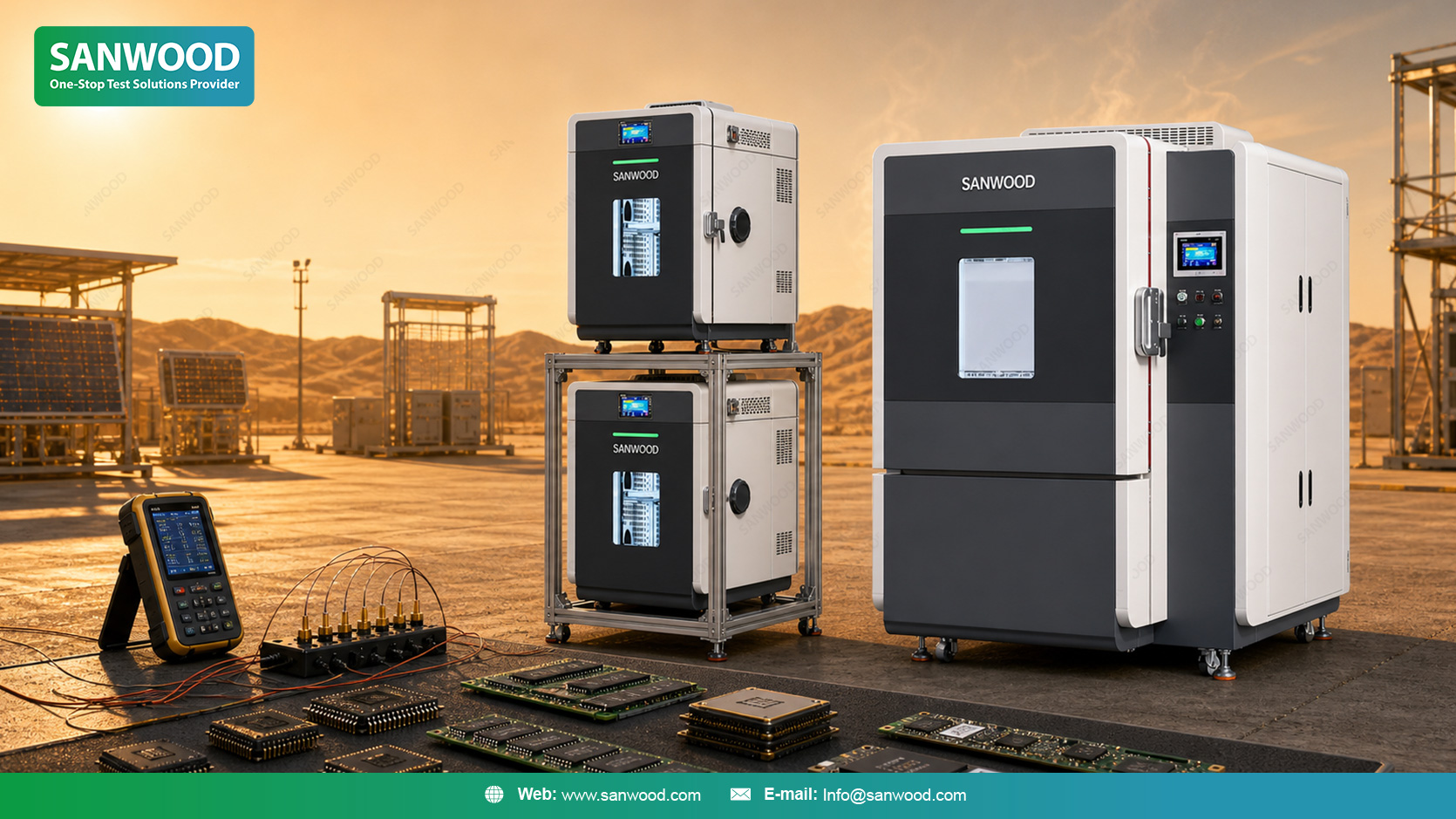
In semiconductor reliability testing, a wide temperature range is useful. But it is not the whole story. For AI chips, HBM-related devices, advanced packaging, Memory ICs, MCU products, eMMC, enterprise SSDs, and electronic modules, engineers need more than a chamber that can simply reach a high or low temperature. They need a chamber that can hold stable, uniform, and repeatable conditions while real samples, fixtures, cables, and heat loads are inside.
A few degrees of difference can affect leakage current, timing behavior, read-write stability, solder joint stress, package response, or long-term reliability data. If the chamber condition is not controlled well, the test result may reflect the equipment limitation rather than the actual behavior of the device under test.
That is why temperature stability matters.
Many buyers first ask, "How cold or hot can the chamber go?"
That question is reasonable, but reliability engineers usually need to go further. A chamber may have a wide temperature range, but still create unreliable data if the workspace is not uniform, the ramp profile is unstable, or the recovery time is too slow after sample loading.
For semiconductor test chambers, engineers should check:
- Temperature stability
- Temperature uniformity
- Ramp rate
- Recovery time
- Airflow design
- Sample loading capacity
- Heat load from powered devices
- Cable port arrangement
- Sensor placement
- Test repeatability
The real question is not only whether the chamber can reach the target temperature. It is whether the chamber can reproduce the same stress condition again and again.
Temperature uniformity becomes important when multiple samples are tested at the same time.
In a semiconductor lab, the chamber may contain IC packages, memory modules, eMMC devices, enterprise SSD samples, test boards, fixtures, sockets, or sensor wiring. If the temperature is different across the workspace, one sample may experience a different stress condition from another.
That makes comparison difficult.
Poor uniformity can come from blocked airflow, overloaded shelves, dense fixtures, large sample mass, powered samples, or incorrect sensor placement. For reliability testing, sample arrangement should be considered before the test starts, not after inconsistent data appears.
A well-configured High and Low Temperature Test Chamber should support stable airflow and repeatable test conditions across the working area.
Ramp rate is another detail that deserves careful attention.
Some semiconductor tests require gradual temperature transitions. Others require faster temperature change to evaluate thermal stress, package response, solder joint fatigue, or module-level reliability.
Faster is not always better. The correct ramp rate depends on the device, package structure, failure mode, and test method.
For applications involving AI chips, HBM-related packages, Memory devices, eMMC, MCU, enterprise SSDs, or electronic modules, engineers should define the expected temperature profile clearly before choosing the chamber.
When controlled fast transitions are required, a Rapid Temperature Change Test Chamber may be more suitable than a standard temperature chamber.
Recovery time is often overlooked.
After the chamber door opens, samples are loaded, or powered devices begin generating heat, the chamber needs time to return to the target condition. If recovery is slow or unstable, the actual stress profile may not match the planned test.
This matters in semiconductor reliability work because test duration, dwell time, and exposure condition all affect the final data.
A chamber with good recovery performance helps engineers maintain more consistent test conditions, especially when working with loaded fixtures, test boards, cables, or powered samples.
A chamber is rarely tested empty in real use.
In semiconductor projects, the chamber may contain:
- IC test boards
- Burn-in boards
- Socket fixtures
- Memory modules
- eMMC samples
- Enterprise SSD racks
- Thermocouple wires
- Signal cables
- Data monitoring equipment
These items can change airflow, heat distribution, and temperature response.
Before selecting a chamber, engineers should define the real sample size, quantity, fixture layout, cable requirements, and whether the device will be powered during testing.
This information helps determine chamber size, airflow design, port configuration, and whether a customized setup is needed.
Some semiconductor tests focus only on temperature. Others require both temperature and humidity validation.
Humidity can affect package materials, insulation resistance, corrosion behavior, moisture absorption, and long-term device stability. For IC packages, memory modules, advanced packaging, and electronic assemblies, humidity stress may become more important when combined with elevated temperature.
In these cases, a Temperature Humidity Test Chamber can help engineers evaluate controlled temperature and moisture exposure together.
For accelerated moisture-related evaluation, HAST may be considered when the test plan and device structure require it.
SANWOOD Technology provides environmental test chambers for semiconductor, memory, and electronics reliability testing, including High and Low Temperature Test Chambers, Temperature Humidity Test Chambers, Rapid Temperature Change Test Chambers, and related systems for IC, Memory, eMMC, MCU, enterprise SSD, AI chip, and advanced packaging applications.
For semiconductor projects, the right chamber selection should begin with the test condition:
- What device will be tested?
- How many samples will be loaded?
- Will the samples be powered?
- What temperature profile is required?
- Is humidity control needed?
- Are cables, fixtures, or test boards used inside the chamber?
- What data needs to be monitored?
- How repeatable must the test be?
The goal is not to select the widest temperature range by default. The goal is to match the chamber to the device, sample loading method, test profile, and reliability question.
Before choosing a semiconductor test chamber, reliability engineers should check:
- Required temperature range
- Temperature stability tolerance
- Temperature uniformity across the workspace
- Ramp rate requirement
- Recovery time requirement
- Sample size and quantity
- Fixture and shelf layout
- Powered sample heat load
- Cable ports and signal access
- Sensor placement
- Whether humidity control is required
- Whether rapid temperature change is necessary
For semiconductor reliability testing, stable and repeatable conditions are just as important as the temperature range itself.
If your team is planning tests for AI chips, HBM-related devices, Memory ICs, MCU devices, eMMC, enterprise SSDs, advanced packaging, or electronic modules, SANWOOD can help review your test conditions and recommend a chamber configuration based on your sample type, loading method, temperature profile, and monitoring requirements.
Sanwood is not just a company; it is a commitment to delivering high-quality products that stand the test of time.

 English
 中 文
中 文


 info@sanwood.com